I used to hate writing proposals. Not the work itself, exactly, but the sinking feeling that came with it. A potential client would ask for a quote, and I would open a blank document and stare at it, wondering how much detail to include, whether my price would scare them off, and how long this one would take. The honest answer was: too long. My early proposals took ninety minutes each, sometimes two hours, and half of them went nowhere. I was spending entire Fridays writing documents that earned me nothing.
The worst one was for a local gym that wanted a month of social media captions. I wrote six pages. Six. I explained my process, my philosophy, my background, three package options, a timeline, a list of tools I use, and a paragraph about why content matters. The owner replied with a polite thanks and chose someone cheaper. I had spent a whole evening on it, and I could not even tell you today what that proposal said, because it said everything and therefore nothing.
That rejection stung enough to make me change. I sat down the following weekend and built myself a template, not a fancy one, just a single page with fixed sections I could fill in fast. The goal was simple: cut the writing time in half without making the proposal feel like a form letter. It worked better than I expected. My proposals now take thirty to forty minutes, and my close rate went up, not down. Here is exactly what I put in it.
Section one: the problem, in their words
My template opens with two or three sentences about the client's problem, written the way they described it on our call. Not my diagnosis, not a generic statement about the importance of good content, but their words reflected back. If a bakery owner told me she has great cakes but nobody finds her online, that is the opening line. It tells the client I actually listened, and it takes about two minutes to write because I am just summarising the call.
This section does more work than anything else in the proposal. Clients skim proposals fast, usually on their phones, and if the first paragraph could belong to any business in any town, they stop reading. If it names their exact problem, they keep going. I keep a short note during every discovery call now, just three bullet points: what they sell, who they want to reach, and what is not working. Those notes become this section almost word for word.
I made this mistake for years, so I will say it plainly: never open with yourself. Your bio, your years of experience, your awards, none of that belongs at the top. The client does not care yet whether you have been freelancing for two years or ten. They care whether you understand their problem. Prove that first, and they will happily read about you later.
Section two: what I will actually do
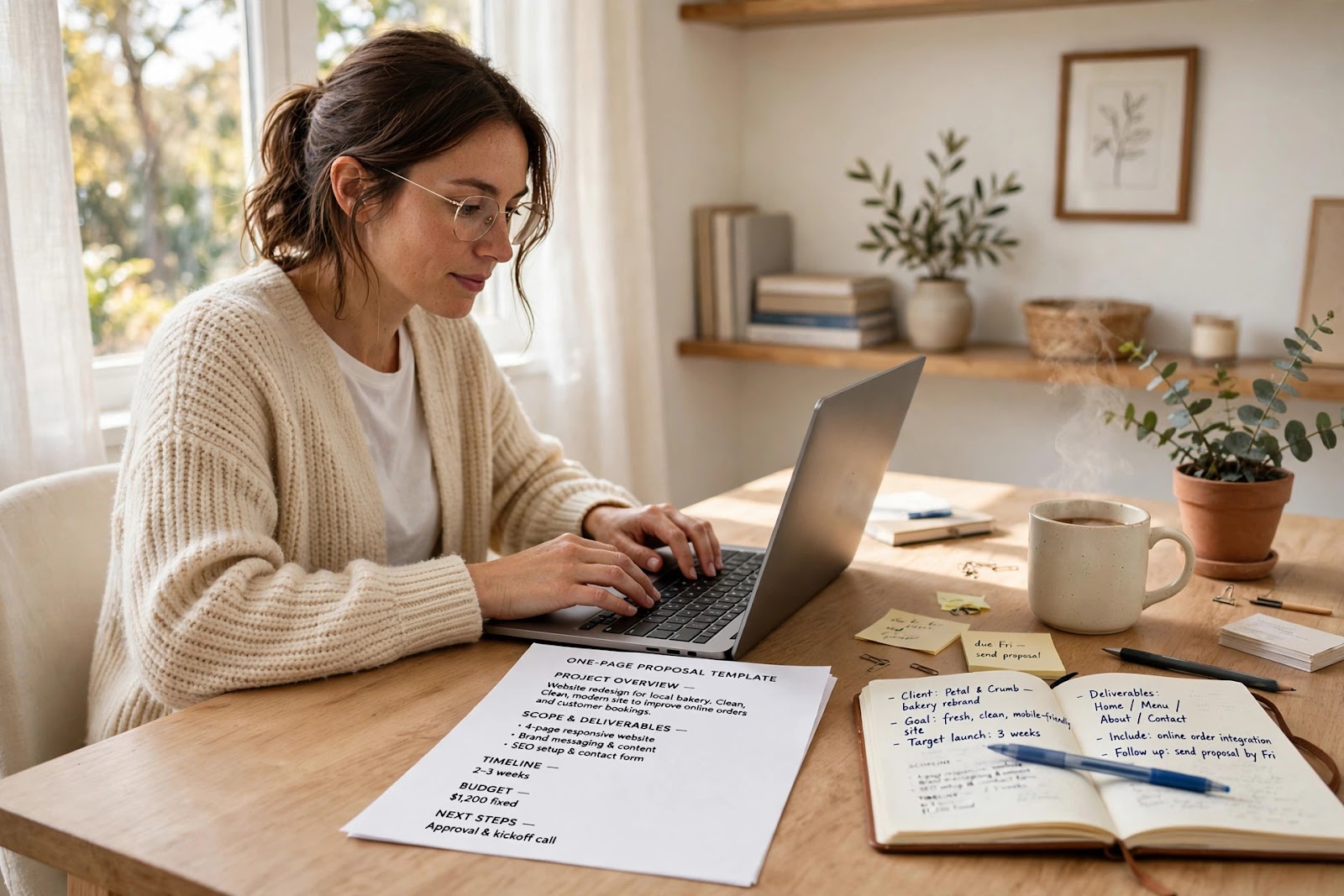
The second section is a short, specific list of deliverables. Not services in the abstract, but concrete items with numbers. Twelve Instagram captions per month, two blog posts of around eight hundred words, one monthly report. If the client cannot picture what they are buying, they cannot say yes to it with confidence. Vague deliverables also cause the worst disputes later, because both sides remember a different version of what was promised.
I write this section as plainly as I can. No jargon, no clever phrasing. Each deliverable gets one line, and I cap the list at about eight items. If a project genuinely needs more, I group them, but I never let this section sprawl. The gym proposal that failed had a whole page of deliverables described in paragraphs. My current version would list the same work in six lines, and the client would actually read all six.
One habit that transformed this section: I include one line about what is not included. For a captions package, that might be photography or paid ad management. It takes ten seconds to write and it prevents the classic message three weeks in that begins with, I thought this included... Clients respect the honesty, and I never again argue about work I never agreed to do.
Section three: price, timeline, and the next step
Then comes the part freelancers most often fumble: the price, stated plainly, with no apology wrapped around it. My template has a single price line for the recommended package, plus a shorter note if there is a smaller option. I stopped offering three confusing tiers after noticing clients picked the cheapest almost every time, then asked for the middle tier's work anyway. One clear price, one clear scope, one decision.
Under the price I put a timeline in plain language: first draft in seven working days, revisions within three days of feedback, project complete in about three weeks. Clients love timelines more than they love low prices, in my experience, because a timeline tells them when their problem starts getting solved. I also state my payment terms here, fifty percent upfront and fifty on delivery, so there is no awkward money conversation after they have already said yes.
The final section is the shortest and the most important: what happens next. Reply to this email and I will send the contract and invoice today. That is it. No paragraph about looking forward to a fruitful collaboration. A proposal without a next step is just an essay, and essays do not get signed. Every proposal I send now ends with one action, one sentence, and a deadline for my own follow-up if they go quiet.
What I cut out, and why it helped

Cutting was the real secret, not adding. My old proposals included a full about-me page, testimonials, a tools list, and a long explanation of my process. I removed all of it from the proposal itself. Testimonials now live on my website, where interested clients can find them. My process gets explained on the call, where I can answer questions. The proposal is a decision document, not a brochure, and treating it that way halved its length overnight.
I also stopped customising the design for every client. My template is a plain document with my name, the client's name, the date, and the sections above. It looks clean and professional, and it takes zero design time. Early on I wasted hours choosing fonts and colours for proposals that were read once and deleted. Nobody has ever hired me because my proposal looked beautiful. They hire me because it was clear, fast, and showed I understood their problem.
The time savings add up in a way that surprised me. At ninety minutes per proposal and four proposals a week, I was losing six hours weekly to documents. At thirty-five minutes each, I save more than three hours a week, which is over twelve hours a month. That is time I now spend on actual client work, or, just as valuable, on finishing early on a Friday without guilt.
Steal this structure and make it yours
If you build your own version, start with the skeleton and resist the urge to decorate it. Problem in their words, specific deliverables, price and timeline, next step. Four sections, one page, maybe two if the project is large. Fill it in from your call notes, not from memory, and send it within twenty-four hours while the conversation is still fresh. Speed matters here: a proposal sent three days later competes with every other freelancer the client talked to since.
Then measure it honestly for a month. Track how long each proposal takes and how many get accepted. My numbers after switching were stark: writing time dropped from about ninety minutes to about thirty-five, and my acceptance rate rose from roughly one in three to roughly one in two. I cannot promise you the same numbers, because your niche and pricing are different, but I can promise the direction. Clear and fast beats long and impressive almost every time.
One practical detail that makes the template even faster: I keep a short swipe file of phrases that worked. Not whole proposals, just lines. The way I describe a monthly report, the sentence I use for payment terms, the one-liner for what is not included. When a new proposal comes in, I am not inventing language from scratch, I am assembling proven sentences around the client's specific problem. That is why thirty-five minutes is realistic, not optimistic. The custom part is the thinking about their business. The wording is already tested.
I also send a short message with the proposal, not just the document alone. Two lines in the email body: here is the proposal we discussed, and the price and timeline are on page one. Clients have told me they appreciate that, because it means they do not have to hunt through an attachment to find the number they actually care about. Small courtesies like that cost nothing and make you look organised, which, frankly, is half the sale.
One last thing I wish someone had told me sooner: a proposal template is not a shortcut that makes you lazy. It is a system that frees your attention for the only part that should be custom every time, which is understanding the client's actual problem. The template handles the structure. You handle the thinking. That division is why my pitch time halved, and why the proposals I send now sound more personal than the hand-crafted six-page versions ever did.


