I used to think follow-up emails were pushy. So I didn't send them. I'd pitch a client, hear nothing, and quietly decide they'd hated my work. Months later I bumped into one of those "silent rejections" at a virtual event, and she said, "Oh, I meant to reply! Your email got buried under a product launch." She hired me the next week. That one conversation changed how I follow up forever.
Most unanswered emails aren't rejections. They're busy people with full inboxes. A good follow-up just makes it easy for them to say yes — or no — without feeling cornered. Here's the exact system I use now, including the template, the timing, and the mistakes I had to unlearn.
The first time I followed up, I sounded desperate
My early follow-ups were terrible. "Just checking in!" with nothing else. "Just bumping this to the top of your inbox!" as if the client had nothing better to do. "Did you get a chance to look at this?" — a question that basically accuses them of ignoring me. No wonder nobody replied. I was asking for their time without giving them anything in return.
The fix was embarrassingly simple: every follow-up needs one new piece of value or one easier decision. A fresh idea for their project. A shorter question they can answer in ten seconds. A clear next step with a date. Once I started adding something useful instead of just poking them, my reply rate jumped. I'd estimate it roughly doubled, from maybe one reply in five to two in five. Not scientific, just my own inbox over a year of tracking.
The template I actually send
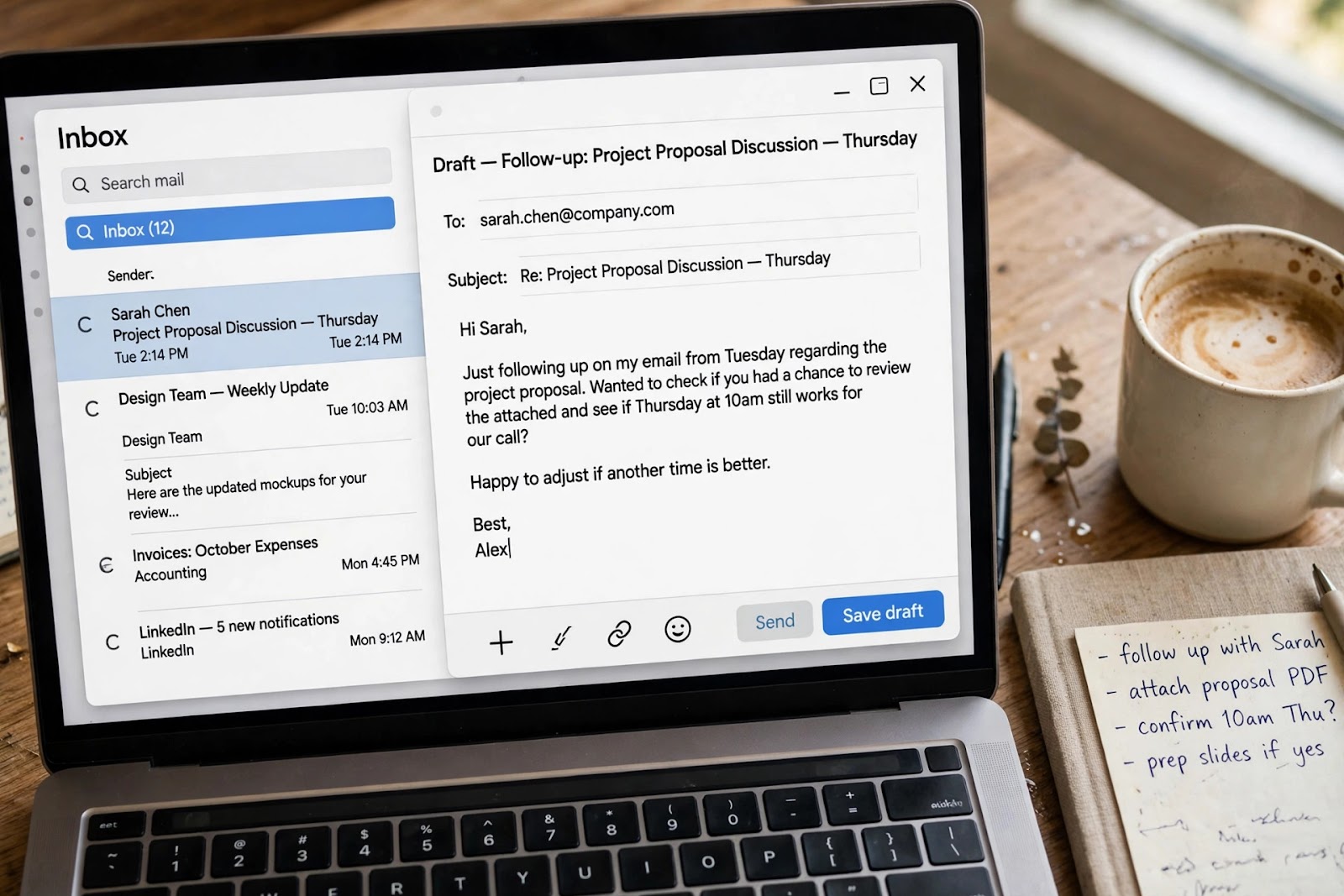
Here's the template, word for word in spirit, for a first follow-up after a proposal or pitch. Subject line: "Re: [their project name]" — I just reply in the same thread, never a new email. That keeps all the context in one place and saves them searching.
Body: "Hi Sarah, following up on the blog series proposal I sent Tuesday. One quick thought since then: your competitors are all publishing comparison posts, and a single 'X vs Y' piece could slot right into the second month. Would a 15-minute call Thursday or Friday work to talk it through? If the timing's not right, no worries — just let me know and I'll check back in a few months."
Why this works: it opens with what the email is about in one line, adds one specific idea that proves I was thinking about their business (not just my invoice), asks a yes-or-no question with two concrete days, and gives them a guilt-free out. That last line matters more than people think. People reply faster when "no" is an acceptable answer, because they don't have to draft a polite dodge.
I keep the whole thing under 120 words. If I need more room to explain, the proposal itself wasn't clear enough. The follow-up is a nudge, not a second pitch.

Timing: the part most freelancers get wrong
My timing now is deliberate. First follow-up: three business days after the original email. Not the next morning (desperate), not two weeks later (forgotten). Three days is long enough for them to have seen it and short enough that it's still fresh.
Second follow-up: seven days after the first. This one is even shorter. I change the subject angle slightly — a new idea, a relevant article, a question about their launch date — so it doesn't read like a copy-paste. Third and final: two weeks after the second, and I say so plainly: "I'll close the loop on my side after this, but the offer stands if things change."
Then I stop. Three follow-ups total, over about a month. After that, I put them on a "check back in three months" list and move on. Chasing someone four, five, six times doesn't look persistent. It looks like you have no other clients. And honestly, if someone needs six nudges to hire you, the working relationship will probably be exhausting anyway.
One exception: if they replied once and went quiet mid-conversation — say, they asked for samples and then vanished — I follow up faster, within two days, because the thread was warm. Cold pitches get the slower schedule. Warm threads get a quicker nudge.
What day and time? Less magic than you think
People love to argue about Tuesday at 10 am versus Thursday at 2 pm. In my experience, the difference is small compared to just sending the thing. That said, I avoid Monday mornings (inbox avalanche) and Friday afternoons (everyone's mentally checked out). Tuesday through Thursday, between 9 am and 3 pm in the client's timezone, works fine for me.
More important than the hour: don't send follow-ups at midnight your time just because you remembered. I once sent a "quick follow-up" at 1:40 am my time, and the client replied asking if I always worked those hours. It raised a question about my boundaries that I didn't need. Schedule it for the morning. Gmail's schedule-send button exists for exactly this.
Also, match their timezone, not yours. Half my clients are in the US while I'm on a different clock, and a follow-up landing at 4 am their time just gets buried under the morning flood. A two-second timezone check is worth it.
The follow-ups that backfired
Two mistakes still make me cringe. First, the guilt trip. I once wrote, "I put a lot of work into that proposal and haven't heard back." True, but irrelevant to the client, and it made me sound resentful. Never invoice someone emotionally for your effort. They didn't ask you to spend that time.
Second, the fake deadline. "I have another client interested in your slot" — when I didn't. It worked once, and I felt gross about it for a week. Fake scarcity burns trust, and clients talk to each other. Real deadlines are fine: "I'm booking March projects this week" is honest if you actually are. Invented ones are a short-term trick with a long-term cost.
Third, and this one is subtle: following up with a different person at the same company without telling the first contact. It looks sneaky. If you need to escalate, reply to the original person and ask, "Would it help if I looped in someone on your team?" Transparency beats cleverness here.
Tracking it without going overboard
I track follow-ups in a simple spreadsheet: client name, date sent, follow-up 1 date, follow-up 2 date, final date, outcome. That's it. No fancy CRM, no automation tool (yet). Every Monday morning I spend ten minutes checking what's due that week. The system only works because it's boring enough that I actually maintain it.
One column in that sheet taught me something useful: my "reason lost" notes. When someone finally says no, I jot down why — budget, timing, went in-house, hired someone cheaper. After six months, the pattern was obvious. Timing beat price as the reason, almost two to one. That told me follow-ups weren't just polite admin. They were the actual sales job, because half my lost deals were just bad timing that a later check-in could have fixed.
And when someone finally replies with a no, treat it like gold anyway. I reply within a day, thank them, and ask one short question: "Is it timing, budget, or fit?" Most people answer, and that answer goes straight into the spreadsheet. A "timing" no becomes a check-back in three months. A "budget" no tells me my proposal was priced above their range, which is useful for the next pitch to a similar company. A "fit" no just closes the file cleanly. I once got a referral from a client who'd said no, because my gracious reply was the last impression she had of me. A polite no is not a dead end. It's a door left ajar, and the way you handle it decides whether it ever opens again.
So if you're sitting on unanswered pitches right now, here's my honest take. Don't rewrite your portfolio. Don't lower your rate. Send one short follow-up, three business days after the original, with one new idea and one easy question. Then send the second one a week later, and a polite final one after that. Most freelancers never send even the first. Doing it properly, three times, already puts you ahead of most of your competition — and it costs you about ten minutes a week.


