For my first year of freelancing, every month started the same way: with a quiet panic about where the next project would come from. I'd finish a job, get paid, feel relieved for about a day, and then start the whole hunt again. It was exhausting, and it made me say yes to work I didn't really want, just to keep the calendar full.
A retainer changed all of that. Not overnight, and not perfectly — my first one was messy in places — but it gave me something I'd never had before: a baseline. A set amount of work, a set fee, and a client I didn't have to re-win every single month. Here's how I pitched it, what actually happened, and what I'd do differently now.
Where the idea came from
The client was someone I'd already worked with for about six months, on and off. She ran a small online shop and kept coming back every few weeks with a new request: a product description here, a newsletter there, a batch of social captions when she remembered she needed them. The work was good, but the pattern was chaotic. She'd message me in a rush, I'd squeeze her in, and we'd both end up a bit stressed.
One evening, after the third "urgent" request in a fortnight, I caught myself thinking: this could just be a regular thing. She clearly needed ongoing help. I clearly needed steadier income. The only thing missing was someone actually saying it out loud.
So I decided to be that person. Not with a fancy proposal deck or a sales script — I didn't have either — but with a simple, honest conversation about making the arrangement regular.
The pitch I actually sent
I kept it deliberately low-pressure. I sent her a short email after we'd just wrapped up a project she was happy with, which I think mattered a lot. Pitching when someone is pleased with your work feels very different from pitching out of the blue.
I said something like this: I'd noticed she needed writing help most weeks, and that booking it month by month might make life easier for both of us. I suggested a set package — a certain number of pieces each month, for a fixed monthly fee — and said we could try it for a couple of months and see how it felt. No long contract talk, no hard sell, just a trial.
She replied within a day. She liked the idea, but she wanted fewer pieces than I'd suggested, and she asked what would happen with unused work if a quiet month came along. Those were fair questions, and honestly, I hadn't thought the second one through properly. I told her unused pieces could roll over for one month, but not pile up forever. She agreed, and we started the next month.
Looking back, that trial framing was the smartest accidental thing I did. "Let's try it for two months" is much easier to say yes to than "sign up for a year." It took the pressure off both of us, and it gave us a natural point to review how it was going.
What worked better than I expected

The first thing I noticed was how much calmer my weeks felt. I knew roughly what was coming each month, so I could plan other projects around it instead of cramming everything into panicked gaps. I stopped checking my inbox with dread on Monday mornings, which sounds small, but it changed my whole mood about work.
The work itself got better too. Because I was writing for the same shop every week, I learned her voice properly — the phrases she liked, the ones she hated, the way she talked about her products. Early on, every piece needed a couple of rounds of edits. After a few months on retainer, most pieces went through with tiny tweaks. That saved us both time, and it made me look good without extra effort.
And the relationship changed. When you're a one-off hire, you're a bit disposable. When you're there every month, you start getting looped into plans earlier. She'd tell me about a launch weeks ahead instead of days, which meant I could actually do decent work instead of rushing. I became part of her routine, not just a name in her contacts.
What went wrong
It wasn't all smooth, and I don't want to pretend it was. The biggest problem was scope creep, and it crept in politely. A "quick extra caption" here, a "tiny favour" there. None of them felt like a big deal on their own, but by the third month I was doing noticeably more than the package covered, for the same fee. I hadn't set a clear boundary, so I had nobody to blame but myself.
I also underpriced it slightly. I based the fee on my old per-piece rate, which was already too low at that point, and I didn't factor in the back-and-forth: the planning messages, the quick calls, the time spent keeping track of what was done and what was left. Retainer work has invisible admin, and I gave it away for free.
The rollover rule caused a headache too. In one quiet month she banked several unused pieces, then wanted them all in the next month on top of the regular package. I said yes because I felt guilty, and then had a brutal fortnight trying to deliver double the work. Lesson learned: a rollover cap needs to be a real cap, with a clear limit, not a vague "we'll figure it out."
What I'd change next time
If I were pitching my first retainer again tomorrow, I'd do a few things differently, and I'd do them before the first month starts, not after problems show up.
First, I'd write down exactly what's included, in plain language. Not just "four pieces a month" but what counts as a piece, how many revision rounds are included, and how requests should come in. A shared note or simple document beats a memory of a friendly chat, because friendly chats get fuzzy fast.
Second, I'd price the admin in. Even a small allowance for planning and communication makes the fee honest. If a client wants unlimited quick questions and calls, that's a different package from one where everything arrives in a single brief each week.
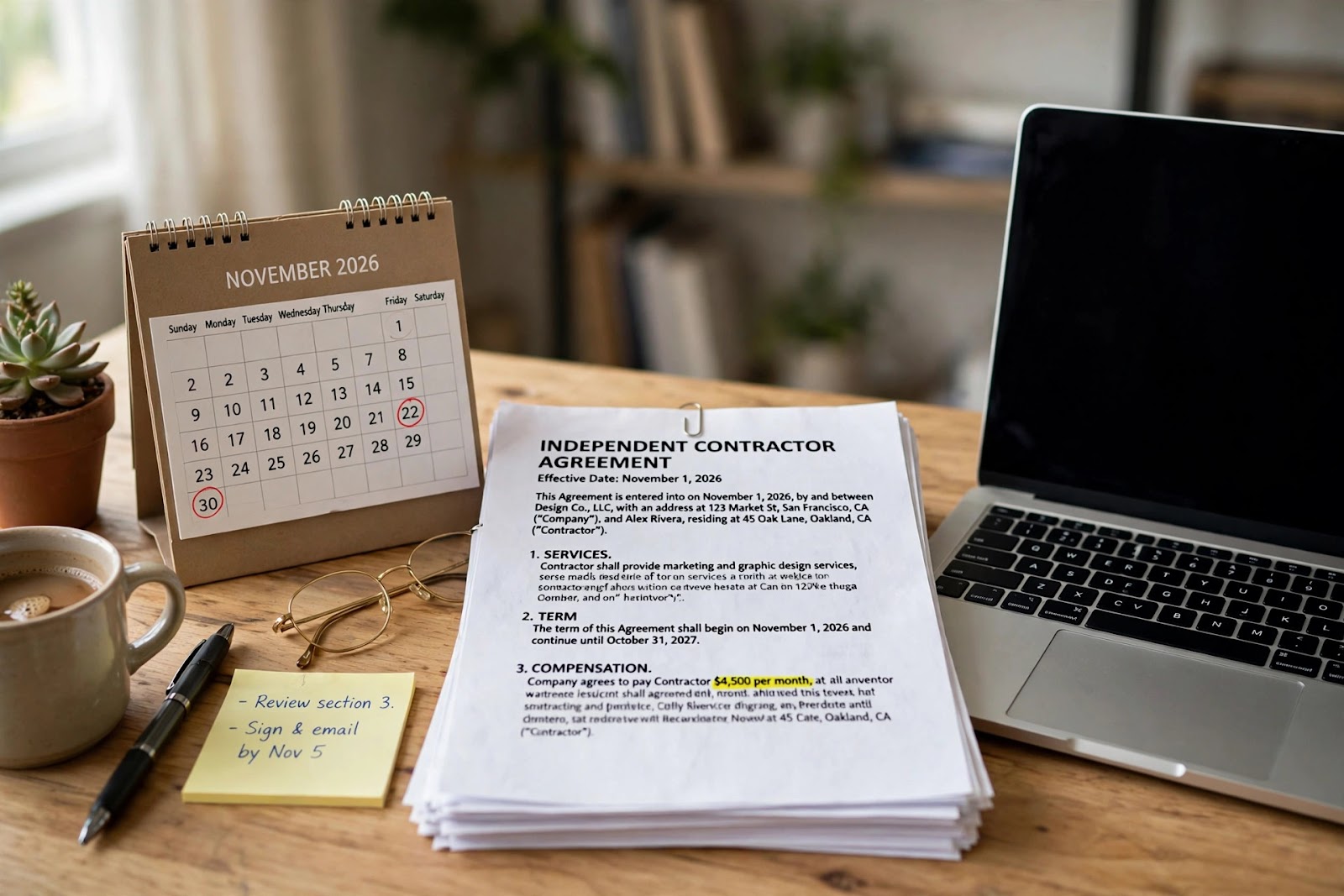
Third, I'd set a firm rule for extras. Something simple like: anything beyond the package gets quoted separately, before I start it. No more quiet favours that add up to a free extra week. I say this kindly now, at the start, so it doesn't become awkward later.
Fourth, I'd build in a proper review. Every three months, a short check-in: is the package still the right size, is the fee still fair, does anything need adjusting? My first retainer drifted for months without a review, which is how the scope creep got so comfortable. A regular review keeps things fair on both sides.
And I'd still keep the trial period. That part worked. Two or three months is long enough to know if the fit is right, and short enough that nobody feels trapped.
How to spot your own retainer candidate
Not every client is right for a retainer, and pitching it to the wrong person wastes everyone's time. The best candidates, in my experience, are the ones who already come back regularly without being chased. If someone has hired you three or four times in a few months, they're already telling you they need ongoing help — they just haven't put a name to it yet.
It also helps if you genuinely like the work and the person. A retainer means spending a lot of time in one client's world. If you dread their messages now, a monthly commitment will only make that worse. Save retainers for clients you'd happily hear from every week.
Timing matters as well. Pitch after a win, not after a difficult project or a late payment. And pitch a solution to their problem — less scrambling, steadier content, someone who already knows their brand — not just a plea for steady income. The steady income is your benefit. Their benefit is the consistency. Lead with theirs.
Would I do it again? Absolutely
That first retainer lasted over a year, and it taught me more about running a freelance business than any course I took. It steadied my income, improved my work, and gave me the confidence to pitch a second and third retainer later on, with much better terms because I'd learned from the first one's rough edges.
If you're still living project to project, look at your client list and ask yourself: who keeps coming back? Who would be relieved if you suggested making it regular? Chances are, there's at least one person on that list who's been waiting for you to say it first.
Send the short email. Suggest a trial. Write down what's included. And don't be afraid if the first version isn't perfect — mine certainly wasn't, and it still changed how I work for the better.


